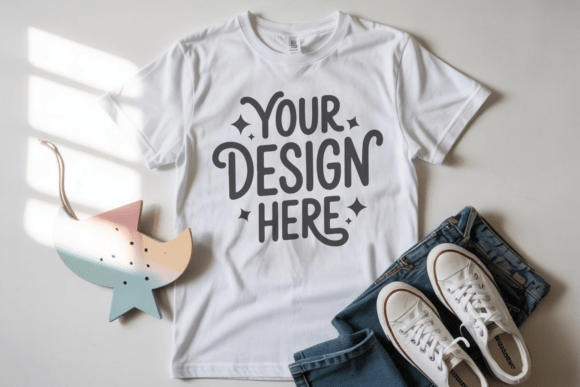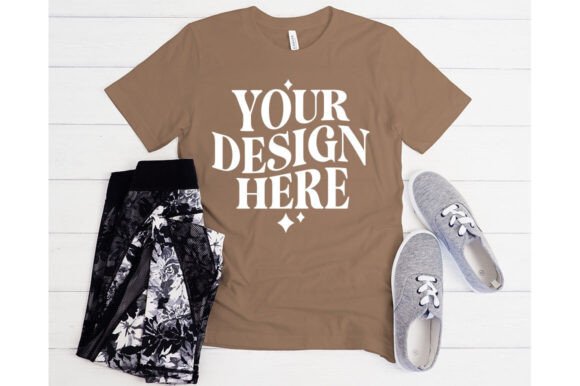
Bella Canvas Pebble Mockup: A Designer's Real-World Review
As a designer who spends more time staring at stitch maps than most people care to admit, I approach every new asset with a healthy dose of skepticism. We have all seen the glossy, perfect images online that promise to elevate our craft business overnight. But when it comes down to the actual needle hitting the fabric, theory often collides with reality. Recently, I got my hands on the Bella Canvas Pebble Mockup to see if it holds up under the scrutiny of a real production environment. This isn't just about how it looks on a screen; it is about how it translates to a finished product that a customer will hold, wear, and wash.
First Impressions and Visual Personality
The moment you load the Bella Canvas Pebble Mockup, the mood is immediately set. There is a grounded, organic feel to the aesthetic that separates it from the sterile, overly polished graphics we often see in the Product Mockups category. The "pebble" theme suggests something natural, smooth, and enduring. For an embroidery designer, this visual personality is crucial because it dictates the type of projects where the design will shine. It feels less like a generic clipart element and more like a textured component ready to be integrated into a larger narrative.
The layout and detail level are surprisingly nuanced. In the world of Graphics, simplicity can sometimes read as lazy, but here it reads as intentional. The shapes are clean, which is a double-edged sword for embroidery. On one hand, clean lines are easier to digitize and stitch out without frustration. On the other hand, they leave no room for error; any wobble in your stitch density or tension issues will be immediately visible. The visual appeal lies in its versatility. It doesn't scream for attention, which makes it an excellent candidate for boutique branding where subtlety equals sophistication.
Real-World Application: The Custom Sweatshirt Scenario
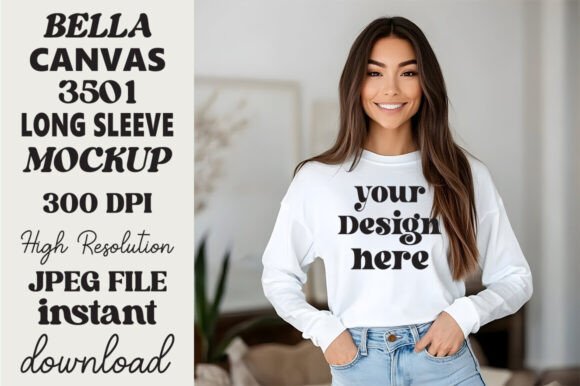
To truly test the Bella Canvas Pebble Mockup, I imagined a specific client request: a limited-run collection of unisex sweatshirts for a local coffee shop looking to rebrand with an earthy, sustainable vibe. They wanted something that felt handmade but professional. This is where the mockup becomes a vital tool in the planning phase. Before cutting a single piece of fabric or hooping a machine, I used the mockup to visualize how the design would sit on the chest of a heavy cotton blend.
In this scenario, the mockup helped me determine placement. Would a large central graphic overwhelm the garment, or would a small left-chest emblem look too insignificant? The Bella Canvas Pebble Mockup allowed me to play with scale effectively. It became clear that for sweatshirt embroidery, the design needed to be bold enough to stand out against the texture of the fleece but detailed enough to maintain its "pebble" character. If I were to use this for a tote bag design instead, the approach would shift entirely. A tote bag offers a flat, stable canvas, allowing for finer details and perhaps a combination of satin stitch borders with fill stitch interiors to create depth.
For Etsy sellers and handmade shop owners, this kind of visualization is gold. It bridges the gap between a digital idea and a physical handmade product. When a customer sees a listing photo generated from a high-quality mockup, they aren't just buying a shirt; they are buying the promise of the final result. The Bella Canvas Pebble Mockup conveys a sense of quality that builds customer trust. It tells the buyer that the seller cares about presentation, which often justifies a higher price point for custom apparel or personalized gifts.
Navigating Fabric Textures and Stitching Challenges
However, a pretty picture on a screen does not guarantee a successful stitch-out. This is where practical judgment comes in. The Bella Canvas Pebble Mockup features smooth gradients and soft edges in its visual representation, but translating this to thread requires careful consideration of fabric texture. If you are stitching on a textured towel or a waffle-knit blanket, the smooth lines of the pebble design might get lost or appear jagged. In such cases, increasing the stitch density or opting for a running stitch outline rather than a full fill might preserve the integrity of the shape.
There are specific situations where you need to proceed with caution. For instance, using this design on stretchy fabrics like jersey knits for baby embroidery projects requires a robust stabilizer strategy. The rounded nature of the pebble shapes means that if the fabric pulls during washing, the design could distort noticeably. Similarly, if you are attempting this on a curved surface like a cap, the center of the design needs to be carefully aligned to avoid wrapping around the curve awkwardly. Tiny lettering combined with the pebble motif should be avoided on small hoop sizes, as the details may merge into a solid blob of thread.
Dark fabrics present another challenge. The mockup likely displays the design in light or neutral tones to show contrast. In reality, if you are stitching a light-colored pebble design onto a black hoodie, you must ensure your underlay stitches are sufficient to prevent the dark fabric from peeking through the fill stitch areas. This affects the visual appeal significantly; a patchy design looks amateurish, whereas a solid, vibrant stitch-out enhances brand consistency and professionalism.
Practical Notes for the Serious Embroiderer
Before you commit to selling items featuring the Bella Canvas Pebble Mockup or using it for commercial clients, there are several non-negotiable steps you should take. First, always test the design on scrap fabric that matches your final material. Do not skip this step. Check how the thread colors interact with the fabric base. A color that pops on white might disappear on heather gray.
- Verify File Specifications: Since specific technical details like exact stitch counts or supported file formats are not always inherent to the visual mockup itself, you must confirm these with the source file if you are purchasing the corresponding digital embroidery file. Ensure your machine can read the format provided.
- Licensing Check: Always review the license terms. Just because you have a mockup or a design asset does not automatically grant you the right to sell unlimited commercial embroidery products. Confirm whether the license covers physical goods, digital previews, or both.
- Stabilizer Selection: Match your stabilizer to the fabric weight. A heavy design on a light tea towel needs a cut-away stabilizer to prevent sagging over time, whereas a tear-away might suffice for a sturdy denim apron.
- Contrast Testing: View your digitized version in black and white. This helps you see the true definition of the shapes without the distraction of color, ensuring the embroidery project remains legible even from a distance.
Final Verdict on Value and Usability
The Bella Canvas Pebble Mockup is more than just a pretty image; it is a strategic tool for the modern maker. Whether you are creating holiday embroidery gifts, designing an embroidered patch for a uniform, or setting up a new line of small shop products, this asset provides a realistic preview that saves time and materials. It excels in scenarios where a natural, understated elegance is required. While it demands respect for fabric limitations and stitching techniques, its potential to enhance buyer engagement and elevate the perceived value of your work is undeniable. Use it wisely, test thoroughly, and let it help you build a portfolio of finished products that you are proud to stand behind.